7 Lessons From a $1,000,000 Meme Coin Trading Run
Need articles like this for your video? They help promote it on YouTube and Google — order them in the Telegram bot @sat_sit_bot. Articles with your video embedded are written and posted by the bot itself — on popular topical sites (no ads). Try it free: 50 articles on us.
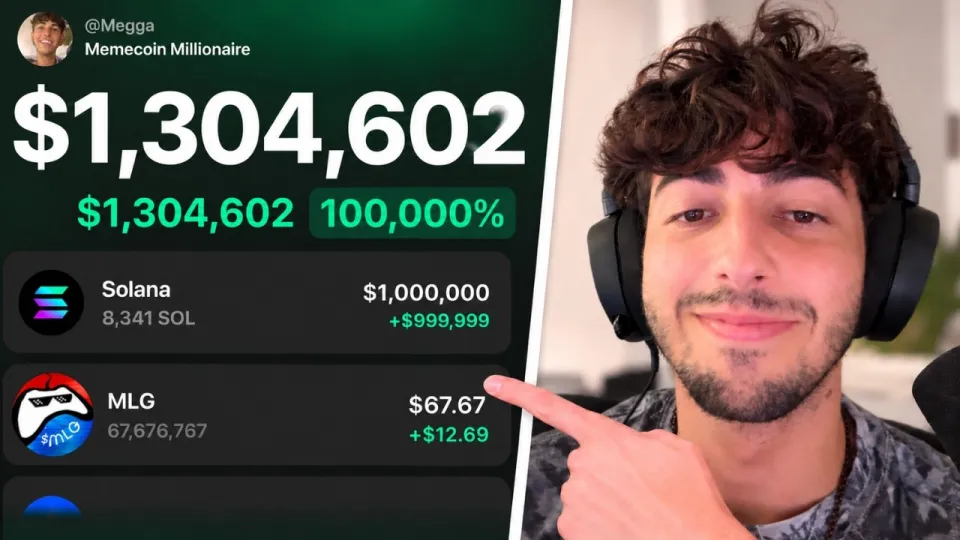
A meme coin is a crypto token whose price is driven almost entirely by attention and liquidity rather than by revenue, users or any underlying business, which is why trading them is a discipline of position sizing and speed rather than of valuation. The $1,000,000 breakdown published by the Fortnite pro turned trader Megga frames the result as the output of a repeatable routine: long hours in the "trenches", small controlled bets, and a willingness to keep showing up after losing streaks. The free course linked in the video description is available here: free meme coin trading course.
What a meme coin actually is and why the odds are stacked
A meme coin has no cash flow, no earnings and usually no product, so its market cap is a pure function of how many people are willing to buy the next tick from the previous holder. That structure produces the defining feature of the niche: profit for one trader is, almost by definition, the loss of another, and the last buyers in a run become the exit liquidity for everyone who entered earlier. This is not a moral judgement but a mechanical one, and it explains why the loudest wins on social media are always matched by a much larger, quieter set of losses. Anyone entering the market should assume the default outcome for an unprepared participant is a full loss of the amount committed, and size accordingly.
How the seven-figure result was actually built
The headline number is the end of a process, not a single trade, and the video's own framing supports that reading: the creator describes grinding 9 to 12 hours a day and treats the outcome as the product of consistency across many attempts. The practical lessons that follow are the ones a new trader can copy without copying the outcome.
- Time in the market beats picking. Screening hundreds of launches, tracking wallets and reading social momentum is repetitive work; the edge comes from doing it every day, not from one perfect call.
- Small size until a thesis proves itself. Risking a fixed small percentage per idea keeps a losing streak survivable, which matters because losing streaks are guaranteed.
- Rules before entries. Deciding in advance when to cut a position removes the decision from the moment when emotion is highest.
- A written record. Logging entries, exits and the reason for each trade turns experience into feedback instead of noise.
- Networking as research. Group chats and voice calls with other traders surface early information and, just as importantly, tell you when sentiment is turning.
- Drawdown management. The mental side is part of the system: a trader who stops following rules after three losses has no system at all.
- Separating process from outcome. A good trade can lose and a bad trade can win; judging decisions by results alone teaches the wrong lessons.
The questions traders actually ask before starting
The most common doubts around meme coin trading are about time, capital and whether the whole thing is just bait, and each has a concrete answer. Comments under the breakdown raise all three: how many hours a day are genuinely required, how much all-time profit justifies joining a trading group, and whether viewers are simply being recruited as liquidity. The honest answers are unglamorous. The hours are long and mostly boring, the capital threshold is less about a number than about being able to lose it without changing your life, and yes, every participant in a zero-sum market is someone else's counterparty. What separates traders is not denial of that fact but a process that keeps them on the profitable side of it more often than not.
Risk, rugs and the liquidity trap
Rug pulls and phishing drains are the two failure modes that end most meme coin careers, and both are avoidable with basic hygiene. A rug happens when the team behind a token removes liquidity or dumps a large insider supply, leaving holders unable to exit at anything close to their entry; a drain happens when a wallet signs a malicious approval or connects to a fake site. The practical defences are simple: never connect a main wallet to unverified sites, keep trading funds in a separate wallet from long-term holdings, check whether liquidity is locked and how concentrated the holder list is, and treat any token promoted only by anonymous accounts with suspicion. A single 200x does not compensate for a drained wallet, and the traders who last are the ones who treat security as part of the strategy rather than an afterthought.
Useful links
Final thoughts
The $1,000,000 figure is a useful hook but a poor template, because it describes an outcome shaped by timing, capital and a market cycle that will not repeat identically. What transfers is the structure underneath it: long hours of unglamorous screening, strict position sizing, a written record of decisions and the discipline to keep executing after losses. Megga's breakdown is worth watching precisely because it presents that grind rather than a shortcut, and the channel is the place to follow the ongoing process. Treat any meme coin position as money you can lose entirely, and the market becomes a calculated bet instead of a lottery ticket. For a structured starting point, the free course linked in the video is the natural next step.
Key takeaways
- The breakdown comes from Megga's video on turning meme coin trading into a seven-figure result, with a free course linked in the description.
- Meme coins have no cash flows or earnings: price is set purely by attention, liquidity and the speed at which holders rotate in and out.
- The creator describes 9–12 hour sessions in the 'trenches' as the core of the process, not a single lucky trade.
- Every dollar of profit in this market is another trader's loss, so late buyers are structurally the exit liquidity for early ones.
- Position sizing and surviving drawdowns matter more than finding the next 200x, because one blown wallet can erase months of gains.
Questions & answers
How much time do you need to trade meme coins seriously?
The breakdown describes sessions of roughly 9 to 12 hours a day, most of which is screening, tracking wallets and reading sentiment rather than placing trades. That level is what full-time attention looks like; anyone with a job should expect far slower progress and should size positions accordingly.
How much capital should you have before joining trading groups?
There is no universal threshold, and all-time profit is a weak signal on its own. What matters is that the capital is genuinely disposable, that you can describe your process, and that you can contribute information rather than only consume it.
Is meme coin trading just taking money from other people?
In a market with no cash flows, one participant's gain is another's loss, so late buyers effectively fund early exits. Understanding that structure is essential: it does not make trading illegitimate, but it does mean the goal is to be early and disciplined rather than to be the last holder.
How do you avoid rug pulls and wallet drains?
Keep trading funds in a separate wallet, never sign approvals or connect to sites you have not verified, and check liquidity locks and holder concentration before buying. A single drained wallet can wipe out months of gains, so security habits belong in the strategy from day one.
Source: How I Made $1,000,000 Trading Memecoins (FULL BREAKDOWN) · Markdown version